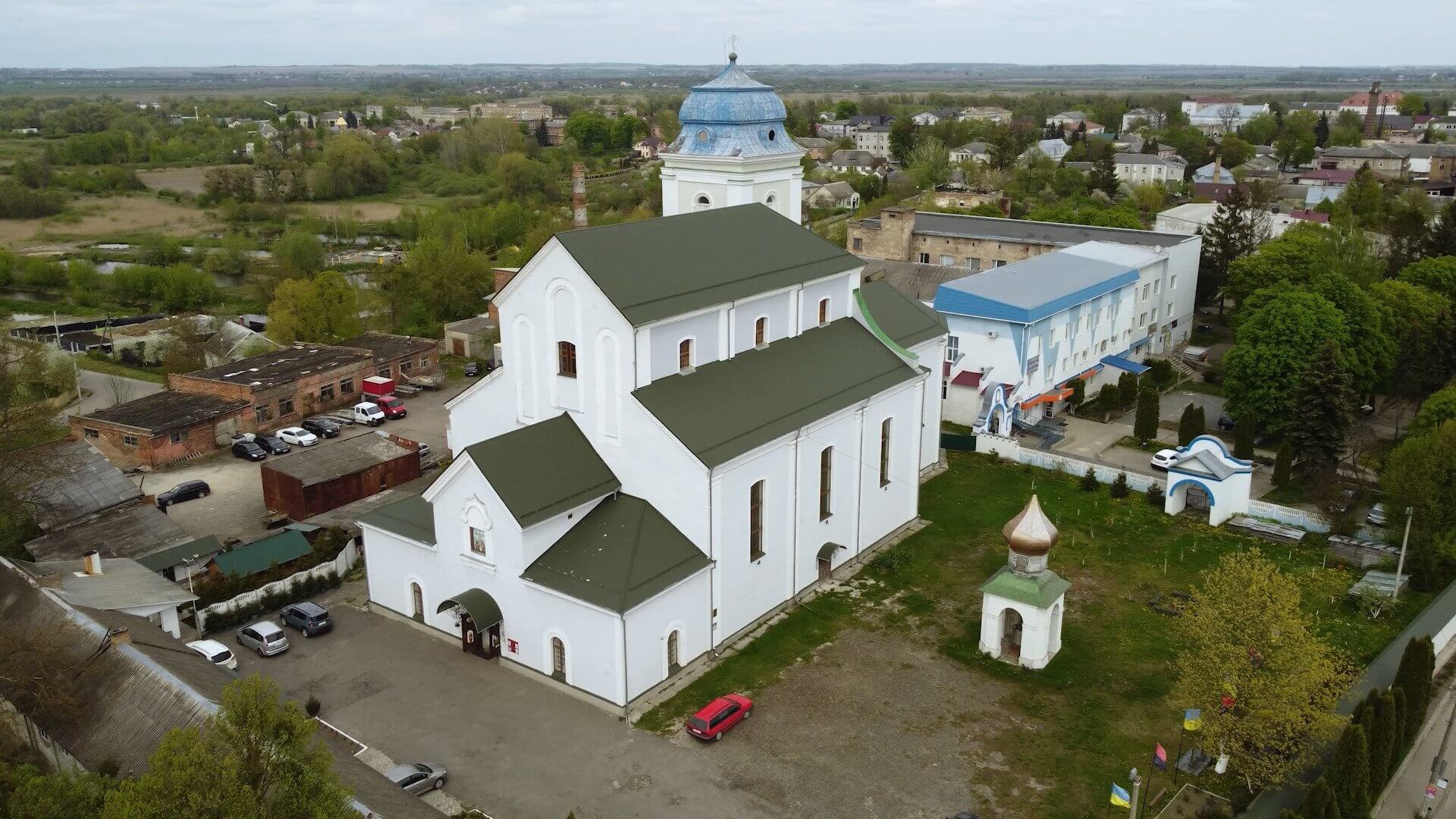
Volunteers of St. Nicholas Monastery: About daily life, activities, and more
Where did it all begin? From 2014. That was when the war in Ukraine started, and life changed for many. This is not about those who lived in areas where fighting took place, nor about those who fought or traveled to the ATO/OOS. This is about those who sought ways to help—buying equipment, finding medicine, prosthetics, and technology.
This is exactly what Nataliya Tataryntseva and Tetyana Sayuk have been doing to this day. Together with the clergy of the Orthodox Church of Ukraine, the volunteers, at the onset of Russia’s full-scale invasion, turned St. Nicholas Monastery into a bustling hive where everyone worked tirelessly toward one goal—helping and achieving victory.
How did this come about, and how has volunteer work affected the lives of the main organizers of this “headquarters”? We were told by Archpriest Vasyl Lozynskyi, the abbot of St. Nicholas Monastery, Mercury (Bikira), and volunteers Tetyana Sayuk and Nataliya Tataryntseva.
– When and how did it all begin for you?
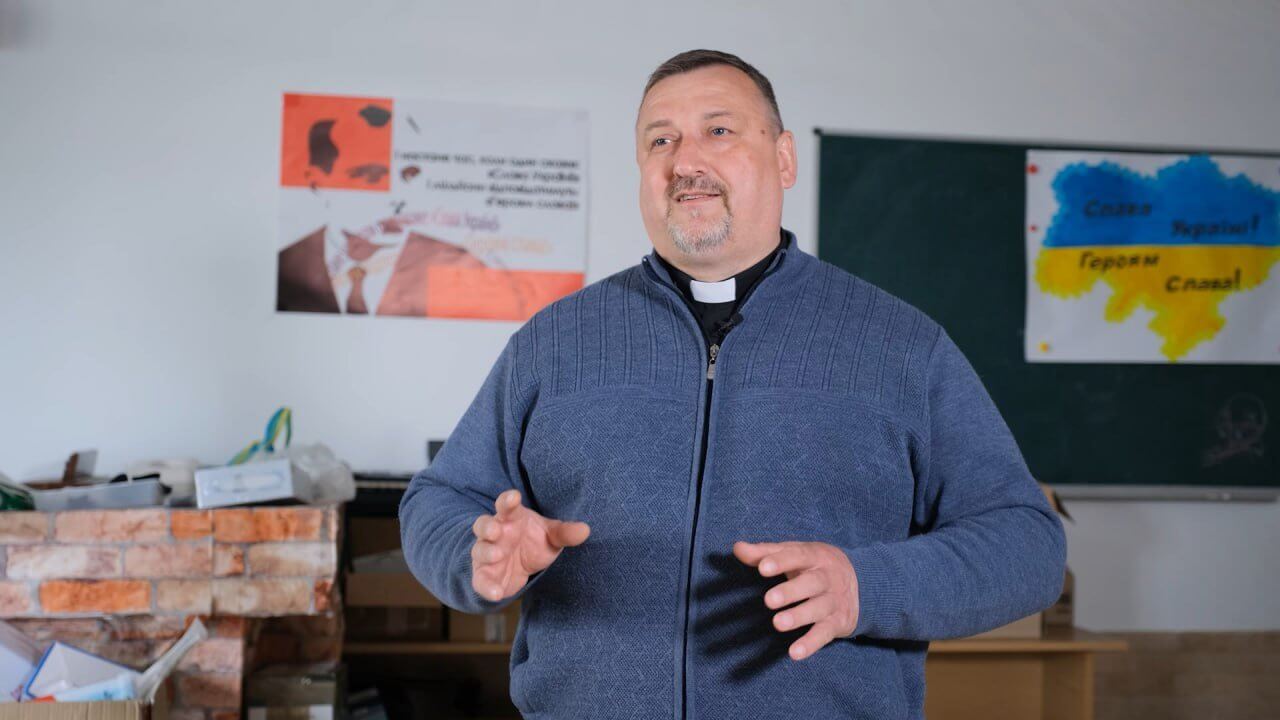
Priest Vasyl Lozynskyi: – We have been involved in defending the country since 2014, trying to organize volunteer movements. Since 2015, I have been engaged in chaplaincy service. However, we understood that a full-scale war was inevitable because Russia’s aggression was planned and gradually implemented. Still, it was a psychological shock. It was difficult for me to adapt and be prepared for this, even though I subconsciously knew it would happen. Of course, there were moments of confusion, anxiety, and concern for loved ones, the community, and my congregation, but decisions had to be made. This, in a way, mobilized my inner strength.
Tetyana Sayuk: Tetyana Sayuk: – I have been volunteering since 2014 and continue to this day. For me, it all started with a sermon by Father Vasyl during a Sunday service when a soldier’s wife asked for help. He was then stationed at the training ground in Tuchyn. And the church began collecting aid. At first, I worked separately from Nataliya Tataryntseva, then we joined forces, and now Nataliya Kanareikina is with us. After all, it is much easier to work when there are like-minded people. If one person is responsible for everything—orders, deliveries, collections—it is overwhelming. But with a larger team, it becomes physically and mentally easier since we can support each other. We started with something very simple: standing outside supermarkets like “Khmilnyky” and “Dubno,” handing out flyers to shoppers. We asked them to buy food or hygiene products for the soldiers. The slogan was: “Bought for yourself—buy for a soldier.” Later, our men traveled to the front lines, delivering these supplies to the military.
Nataliya Tataryntseva: – Volunteering began for us in August 2014. A friend of ours was taken prisoner, and that’s how everything started. We have been striving, together with Tetyana, Natalka (Kanareikina – ed.), Father Mercury, and the church clergy, to move towards victory.
– Let’s recall February 24, 2022—what was that day like?
V. L.: – Like-minded people who had previously been involved in the volunteer movement gathered to discuss what we should do and where we should do it. We chose St. Nicholas Monastery as our base, sought the abbot’s approval, found support and assistance, and step by step, we began to act—to help the military and the city’s defense. We thought about how to support the checkpoints, how to organize food deliveries, and tried to coordinate efforts. Some things worked out, some didn’t, but we tried.
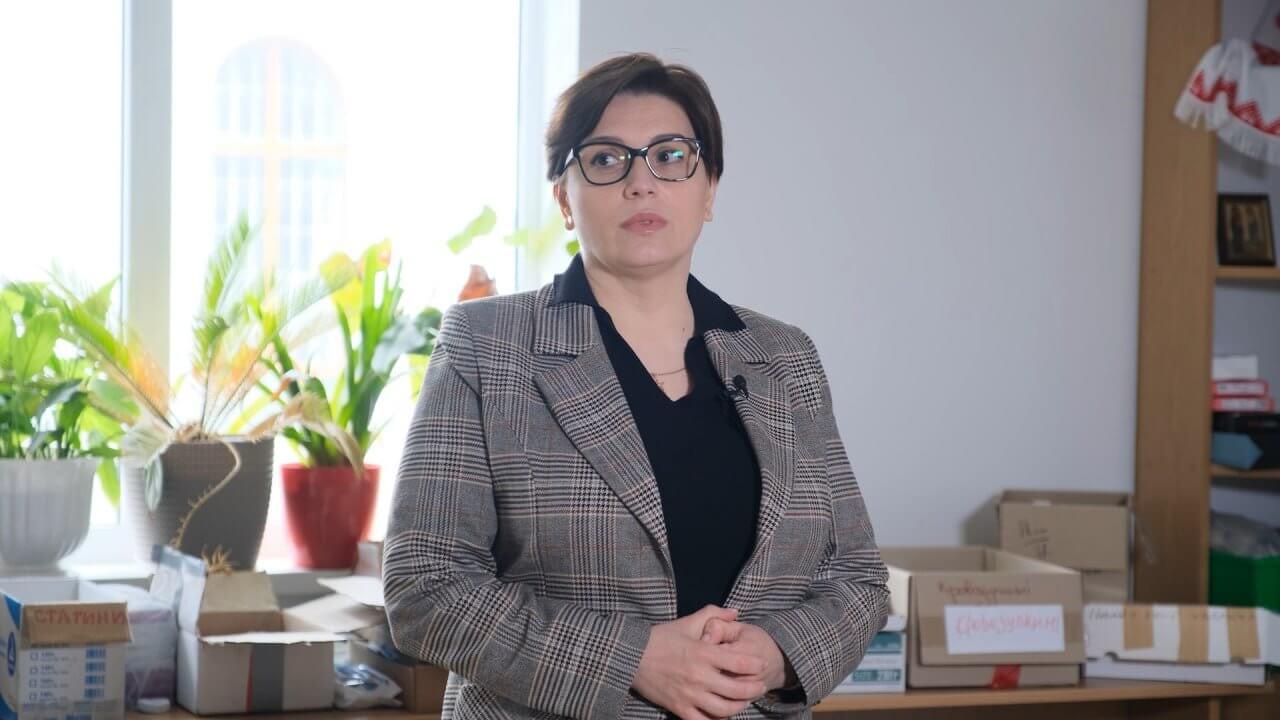
T. S.: – Of course, it was shocking and worrisome. We are all human, and we understand that war is terrifying. I was worried: what to do, where to run, and where to start. I went to pick up my children, called Natalka: “You go, I’ll handle things here.” The next day, we met, and the question arose—where should we base ourselves, where should we organize collections and aid?We turned to the archpriest—Father Vasyl—and asked if we could do this at St. Nicholas Monastery. We approached Father Mercury to see if he would allow us to base our efforts there. And that’s how it all began. By February 25, we had already started work at the monastery—collecting medicine, food, and any aid that people brought us. And we continue to this day.
N. T.: – We knew that a full-scale war would begin. But for some reason, I thought it would be only in the eastern regions. We woke up at 4 a.m., and my husband turned on the news. I was terrified—it was war. My grandmother had told me what war was like. I was very scared for the children, not just my own. I think every person experiences a moment of shock that lasts seconds or minutes. But I already knew what I would do. I knew where to run, whom to contact, and how to proceed. At 10 a.m., I went to the Carmelite monastery and, on the way, called Tanya. By evening, we had decided to ask for permission to base ourselves at St. Nicholas Monastery.
– Did you have any defined roles?
V. L.: – There was no single leader. We made decisions collectively, discussing and consulting with one another. Later, we tried to distribute the aid more widely so that everything wouldn’t be concentrated here. What remained here were medical supplies, food, and valuable items such as military gear and walkie-talkies.
Father Mercury: – As always, we collected what people brought for memorial services and planned to send it to the front, but then the full-scale war broke out.
– Father, what was it like for you to see the church filled with items that were not for worship?
– We continued our services. It didn’t interfere. There are many videos showing the service in progress while men carried boxes around.
– Where did the idea come from to establish the center in the monastery?
T. S.: – With God’s help and with the help of people. I don’t even know how the idea came—it just appeared instantly.
O. M.: – People themselves started gathering here.
V. L.: – St. Nicholas Cathedral had always been a hub for volunteer assistance. It was also the center of our gatherings. The idea arose that everything should be based here. First, because it is a church and a center of service. Secondly, from a practical standpoint—it is centrally located, logistically optimal, and has large spaces.
O. M.: – When the war started, I thought, “That’s it,” because something so chaotic was happening, and people didn’t know what to do. But later, when everything started coming together and things got organized, I thought, “Oh, those Russians are doomed.”
– What was the most difficult part of this work, and how has it changed over the past year?
V. L.: – There was suddenly so much of it. Unfortunately, there was less time for family and close ones and more time spent serving others, helping the military, and assisting internally displaced persons. Although it wasn’t easy, and there were new challenges and concerns, the hardest part was probably organizing everyone and properly distributing the work because there were so many willing people. The most important thing was to channel their energy into something useful.
T. S.: – Back in 2014-15, we spoke with a soldier who said, “I would never go ask for something for someone else.” Our response was that someone has to do it. Of course, without people, we wouldn’t be able to do any of this because people contribute so much, whether financially or with food, hygiene products, and so on. Thanks to them, we can provide these things to the military.
N. T.: – The hardest thing is receiving calls from the war saying that someone has died. Losing friends and acquaintances. Their social media pages and phone numbers remain, but I can’t bring myself to delete them.
– How has volunteering changed your life?
T. S.: – We have been engaged in volunteer work since 2014, and life has gradually changed. You give your energy, your resources, and to some extent, your health. It is stressful, and it comes with responsibility for the work you do. It is psychologically difficult, but I think everyone is struggling emotionally right now. And it is physically exhausting as well. We still have our own jobs to go to, we have to pay taxes, we have to earn a living for our families, and at the same time, we must carry out our volunteer activities.
N. T.: – When the full-scale war began, my husband said, “I understand that until victory comes, my wife won’t be home.” But honestly, he is great—loading, unloading, taking things to the post office, shipping—it’s all on him. Without him, it would be very difficult for me.
– Are people helping less now?
N. T.: – Less. And a certain indifference has begun. Young people surprise me. There are families who ignore the war, as if it doesn’t exist for them. We have no right to judge them, but when soldiers call and say they evacuated three wounded in one night and two died, it is heartbreaking. We don’t even know them, we’ve never seen them. But it hurts so much, especially when they tell us the ages of these kids—born in ‘94, ‘95—what they could have contributed to Ukraine, what they could have done in their lives… The best of the nation is being lost.
– Let’s talk about something positive. What good memories do you have from your work over the past year?
V. L.: – The most positive thing is the sense of unity, which was very strong and very evident. It inspired us, pushed us to act, to do something. And of course, our soldiers. You see their desire to defend, their determination to protect, especially in the combat zones. You see true heroes. We used to read about them in books, but now we see them every day.
T. S.: – Our Ukrainian people, from the very first moment of the war, rose to help the military, to help each other, to support those affected by the fighting. Everyone united, especially the city and district community. There was such a flow of people here, like in a beehive. Everyone contributed in whatever way they could—transportation, food, medicine, physical labor. This created a sense of upliftment and fighting spirit.
N. T.: – I really like our community, but it needs to be united. When it is united, it can accomplish anything. People really came together—Tanya and I had our phones ringing off the hook. There were moments when multiple calls came in at the same time in several messaging apps. We had to restart our phones. But what frustrates me is that when our people see the beginning of victory, they start to let go. It amazes me that they cannot push through to the end.
– If you could dream, what superpower would you like to have?
V. L.: – I already have one (laughs). It is faith. Faith in God, faith in goodness, faith that with God, we can overcome all the challenges and trials that our country is facing. Faith, hope, love, kindness, gentleness, patience, mutual support—these are the superpowers that, I am convinced, will help us win.
T. S.: – For victory to come tomorrow.
– What would you like to say to people?
N. T.: – Don’t fool yourselves into thinking that we will win tomorrow. Dear people, our children will be the ones rebuilding our country. They need to be taught, raised with patriotism, and taught to love Ukraine.
I would like to ask people to pay attention to what they are buying for the military. It pains me deeply to see so many counterfeit tourniquets. This “at least something” mentality doesn’t actually help—it kills. I understand that in the early days, nobody knew, everyone was in distress. But now, after a year of full-scale war and ten years of conflict, I still do not understand what is needed—that is just checking a box.
You can help bring our victory closer by donating through the following volunteer accounts, specifying “Charitable aid for the Armed Forces of Ukraine” in the payment description:
Link to donation page
https://send.monobank.ua/jar/AUE18uX5bu
Tetyana Sayuk
UAH Card: 5457082279252626
IBAN: UA353052990262056400932183327
EUR Card: 5363 5420 1940 6199
IBAN: UA593052990262006400932183843
USD Card: 4149 6293 5711 1566
IBAN: UA663052990262026400932183784
PayPal: 13taniasaiuk@gmail.com
Nataliya Tataryntseva
Monobank UAH: 5375414104244354
PrivatBank UAH: 5457082279472380
PayPal: natashik.sama@gmail.com