Volunteers 4.5.0: If the parcel saved a life, is it worth staying at home?
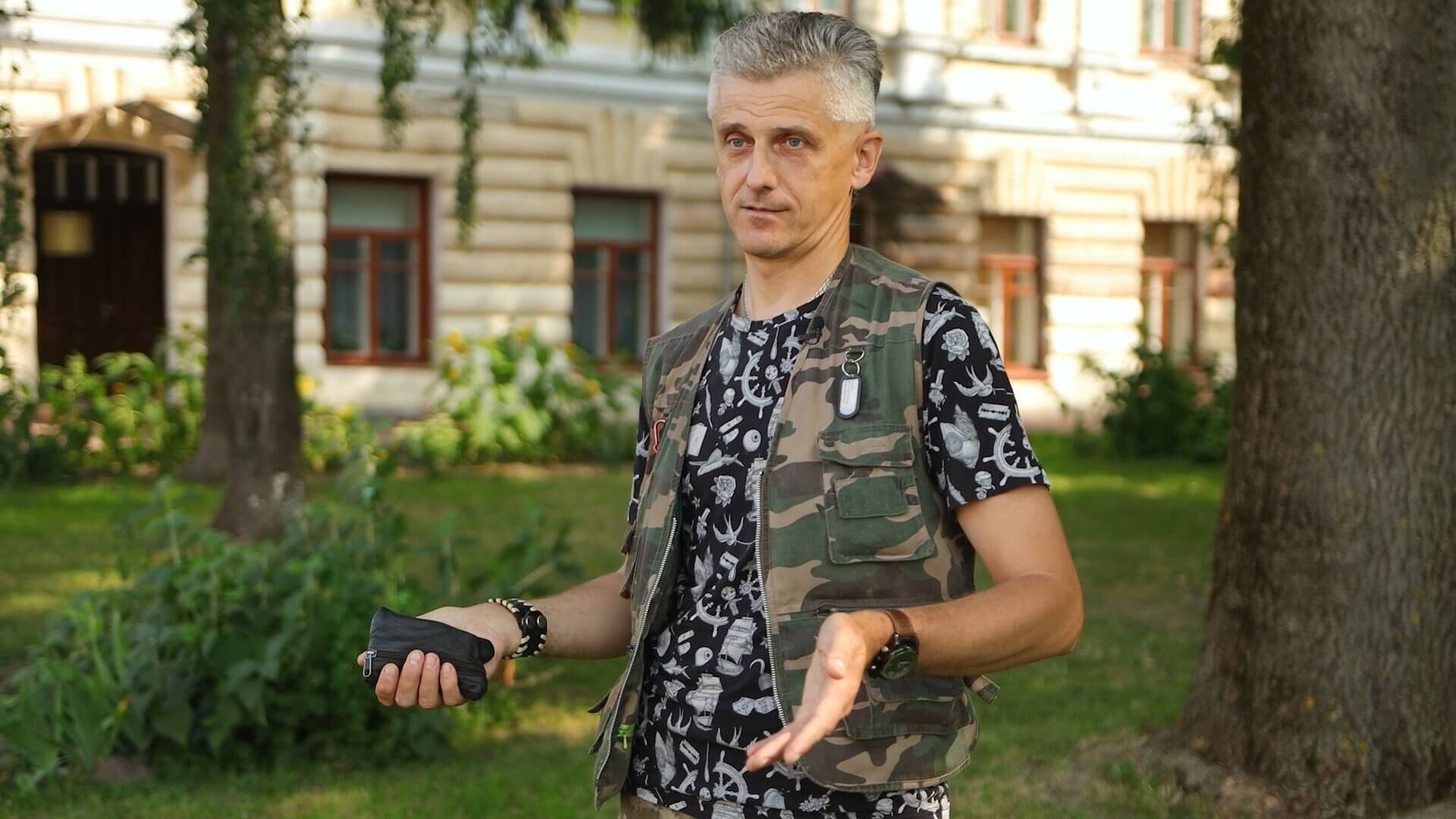
A car is not a luxury, but a necessity. This is said in peaceful life, and what to say about the front line. Thanks to a vehicle, one can quickly deliver essentials, perform a combat task, leave a danger zone, or, importantly, save someone’s life. Therefore, the main activity of the charity foundation “Volunteers 4.5.0” in Dubno is the purchase and import of vehicles from abroad. The charity fund has already imported more than 50 cars. But vehicles are not the only thing they work on as volunteers. The details, nuances, and successes of their activities were shared by Dubno residents from the charity “Volunteers 4.5.0” with the team of the Community Foundation of Dubno “Dobrobut.”
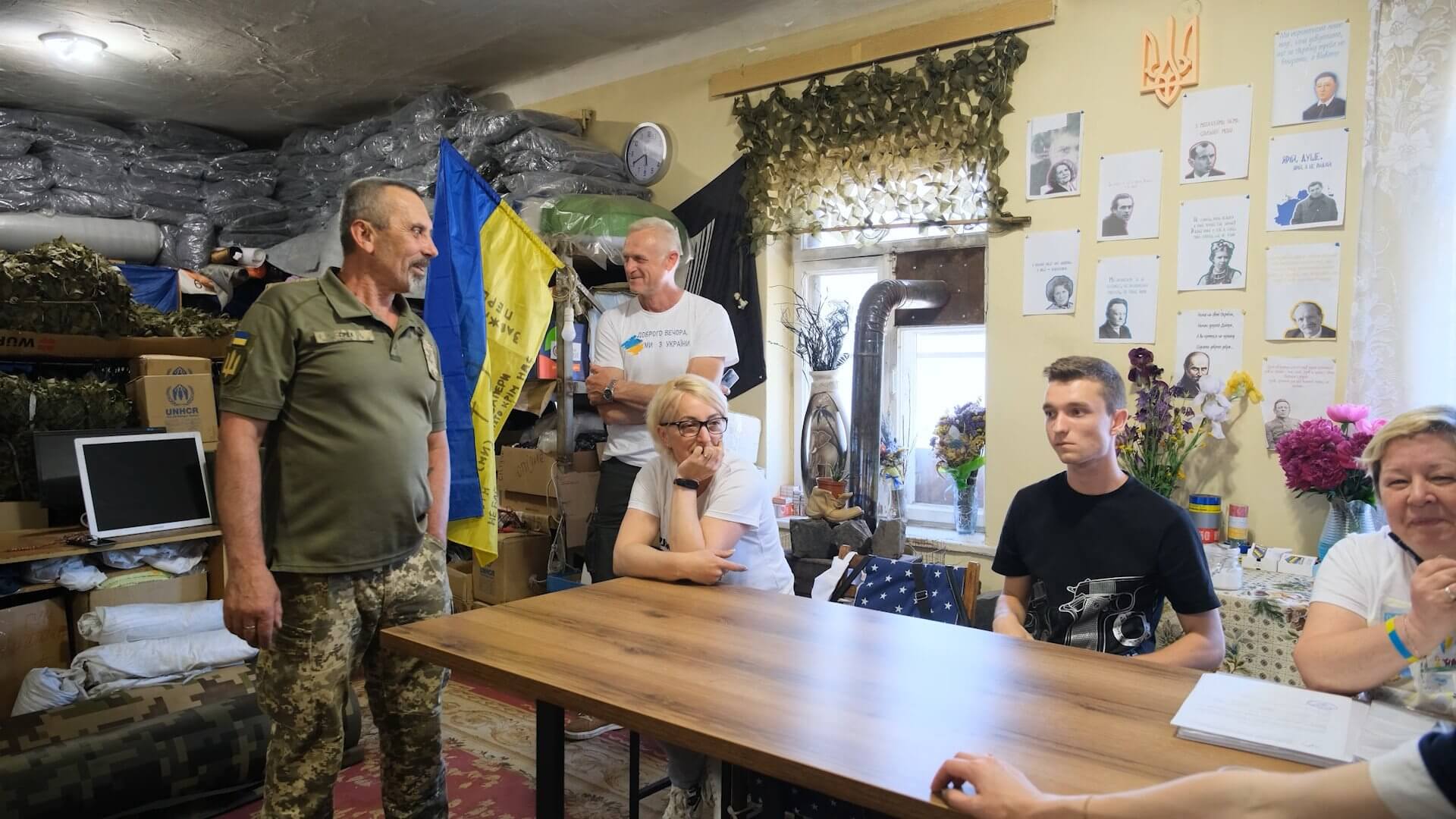
“No one believed that we would do this. They put sticks in our wheels.”
– The car purchases began almost a year ago, on June 24 (2022). One car was purchased with the guys’ money, and we were collecting funds for the second car at the fair in Tarakaniv, says the head of the charity organization, Olga Kuznetsova.
– For people, it was “wow” because medicine, food, spare parts – that’s one thing. But when you bring in a car, especially for a very good person, and it’s desperately needed, it creates such an incredible passion.
No one believed that we would do it. They put obstacles in our way. But today, in our small brown box, there are over 50 car acceptance-transfer acts – this is incredibly rewarding.
This is our pride. Although you understand that we need more, and more, and more. It all comes down to the fact that people are donating less and less. And it’s very difficult to collect funds. At this moment, people from abroad are helping with significant amounts, and our entrepreneurs are helping as well.
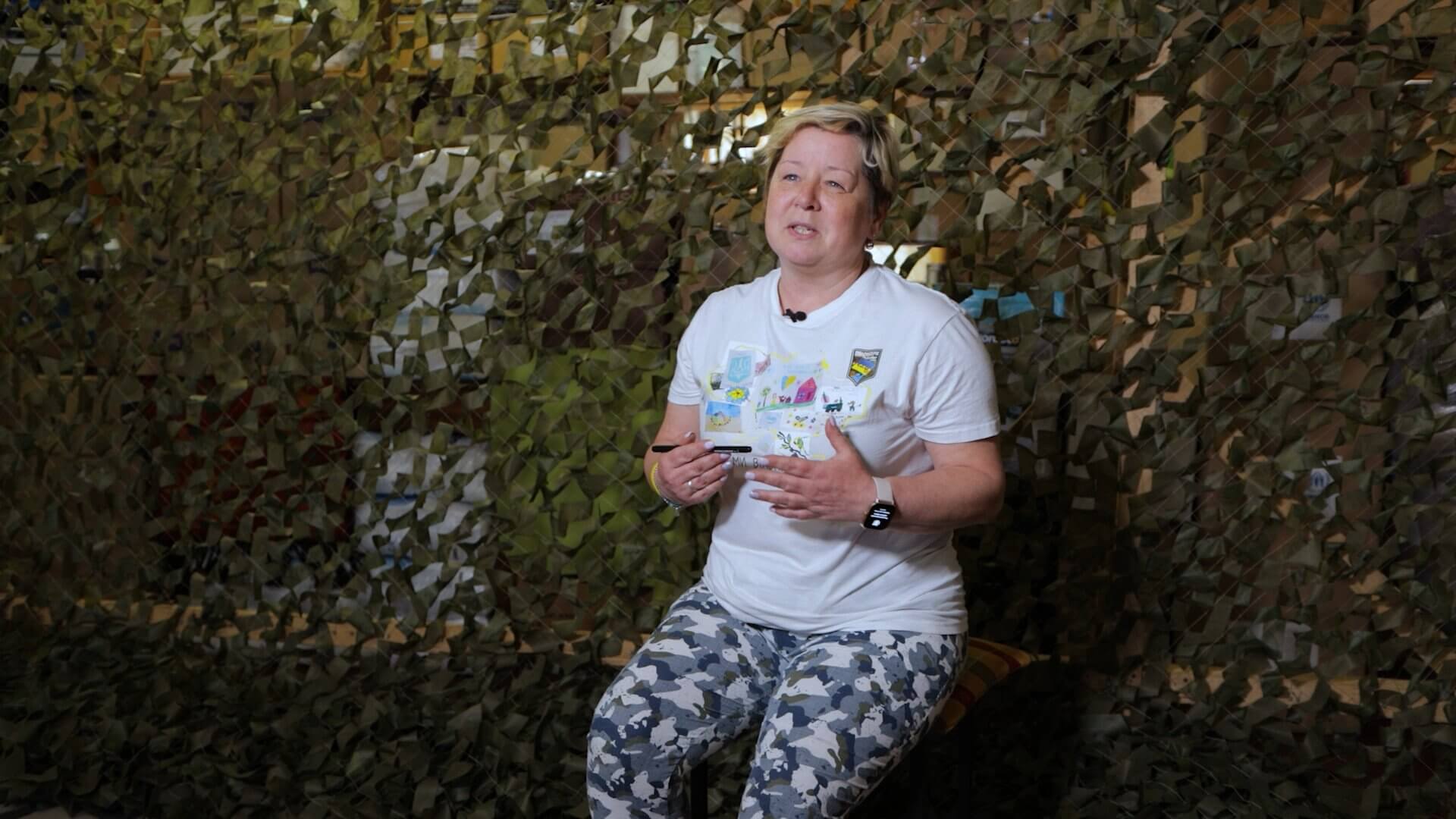
– What is the cost of the cheapest and most expensive car?
– On average, a 4×4 car costs between 3 and 3.5 thousand dollars. The L200 is probably the most expensive car – 5 thousand. The cheapest car is in the range of 2-2.5 thousand, and it is usually a Volkswagen T4. A big thank you to Andriy and Ruslan for each imported car.
– Are these your volunteers?
– Yes, they are our hope. These are the ones we pray for. Because we know many people who bring in cars, not only in Dubno but across Ukraine. I know that they earn money. And here, when Ruslan calls and says, “Send me a few hryvnias – otherwise, I’ll go to work in Lithuania (I didn’t have enough for the way back – editor’s note)” – that speaks for itself. There are unforeseen expenses: toll roads, there might be different prices at customs points, fuel.
“For people, it’s important to know not only where their money went but even where their cookies went.”
– Or they go for one car, and then they go looking for another one…
– Yes, from the photo they sent us, the car looks great, not a van, but a dream car that the guys dream of. They arrive, Ruslan calls and says, “I opened the door, and they fell off.” And there are many, many cases like this. But I know that our guys check the cars. A car that won’t work won’t make it to Ukraine.
– How long does it take to raise funds for a car? Do you remember the fastest collection?
– It was at the beginning of autumn. In one day, we raised 2,500 dollars for one car. I couldn’t even mark the people who were donating. And for people, it’s important to know not only where their money went but even where their cookies went. Unfortunately, not all military personnel can provide reports, but when people see pictures of drawings, baked goods they brought – it really motivates them. It gives people the understanding that they are working for a good cause and can see where the things they brought end up.
– What else does your volunteer work do?
– In addition to cars, in the last month we have delivered about 90 camouflage nets. It’s not just us, because we would have exhausted ourselves here. It’s also the Tarakaniv “spiders” with Olena Petruk, the Boremel Lyceum with its principal, Mrs. Nadia Krotik, and the active residents of Lypa led by Natalia Handzyuk.
Besides nets, recently we have brought a lot of optics. This is what the guys need most. And not to mention the clothing.
We also bring food. We don’t often work directly with hospitals, though we send a lot to them. We have cooperation with the veterans’ house in Lutsk. There are also other facilities where our guys are. We have sent a lot of wheelchairs, food, and clothes to the Lviv Military Hospital.
“Did you know that the medical supplies you sent have already saved 3 lives?”
– What is the most difficult part for you as the head of the organization?
– I lack at least 4-5 hours a day – that is the biggest challenge. Besides my volunteer work, I also have my primary job. There, the people are incredible, they understand me.
It is scary when you send a parcel, and there is no one to receive it. Sasha Prokopchuk was a medic in the 128th Brigade. When we received a huge box of hospital equipment from Maria Andriukhiv, which was needed in the field, we decided to send it to him. We packed 4 boxes and sent them. But Sasha didn’t pick up the parcel, instead, after a while, someone else picked it up. I wrote to his aunt, saying that the situation was like this, and she just screamed at me on the phone. It was the same day that Maksym Kirchik died. Then we found out that Sasha had also died. But in his final moments, he left the parcel to his medics friends. When I called them, they told me: “Did you know that the medical supplies you sent have already saved 3 lives?” So, is it worth sitting at home and watching the news on TV, waiting for the war to end? We must act. Your cookies, your drawing sometimes do much more than criticism of volunteers, more than people just becoming indifferent. They are tired. From what? We are not tired, we will continue until the end, as long as we have strength.
– How does the volunteer work?
– We don’t have days off. We can allow ourselves to close the volunteer work an hour or two earlier.
– Who would you like to thank?
– I don’t know what we would have done if, for example, we didn’t have Viktor Bohomaz, Viktor Mialkovskyi, Tetiana Honcharova, Oleksandr Liskovetskyi, Oleksandr Datsiuk, Anzhela Khomar, the Chokolate team, Vasyl and Nadiia Brovarnytskyi, Bohdan Yuzvyak, Mykhailo Meteliuk, Svitlana Serhiyenko, Andriy Martyniuk, Yevhenii Kravets, Yelyzaveta Yaremchuk, Volodymyr Soroka, Oleksandr Kononchuk, and the lyceum teams, Mrs. Lyudmyla and several hundred others.
It is worth mentioning all the young donors who give their pocket money, help at fairs, the girls – Bozhena Tymoshchuk and Myroslava Sheremeta, who cut their hair and donated the proceeds to the Armed Forces of Ukraine, this is the daughter of the fallen soldier from Dubno, Renata, who sold magnets, these are three brothers from Poland who asked to sell their toys and donate the money to buy a tank.
Our friends from Italy – Nadia Ryndina, Lyuda Samonik, Olga Antonova, the Vinniky family, volunteers from Spain, Ivan and Khrystyna from France, Olga Baranova and Myroslava from Germany, Lyudmyla Ruda from the USA, Maria Andriukhiv from Poland, Lesyk Voznytsia, Lyudmyla Kratka, Roman Demydas, Olena Kutasievych from Sweden, Iryna Krupenina, Olga Kravchenko from the USA, Inna Lysyk from the Czech Republic.
A big thank you to the combat needles, Alla Hrabar’s headquarters, the hostesses of Bortnytsia, the Mazurki families and Raisa Havryliuk, Maria Meteliuk, Lyudmyla Prokopchuk, the communities of Dubno, Father Ihor and Father Roman, Father Volodymyr, LLC “Skloresurs,” “Hualos,” LLC “Dubava,” “Palyanytsia,” to manager Valerii Husaruk and entrepreneurs of the “Rynok” municipal enterprise.
We received a lot of medical supplies from Vasya Yedynak from Poland. He was a medic, a good surgeon, and, unfortunately, died from cancer. He brought vans so packed with medical supplies that there was no space to even stick a hand through the cracks.
“When we hear the word ‘victory,’ I will take unpaid leave and travel to all corners of Ukraine where at least a small parcel has been delivered.”
– What do you dream of, what will you do after the victory?
A lot can be said about the overwhelming feelings you have when you volunteer. But when we hear the word “victory,” I will take unpaid leave and travel to all corners of Ukraine where at least a small parcel has been delivered. If you look at my receipts from Nova Poshta, that’s all of Ukraine. On the map, there is practically no place where something hasn’t been sent from our Volunteers 4.5.0. If there is an opportunity, I will hug all the volunteers in Ukraine, meet our “Kotyky” in Dubno and other cities, many of whom we know only by voice or phone number.
– What superpower would you like to have?
– I already have it. I have it because I have the desire to live, the desire to help, the desire to be useful in this life. I’ve believed since my conscious childhood that this is within me. It’s the backbone that drives me. My country, my family and friends, my team, our army, the trust of people – this is strength, faith, and hope.
– What would you add to conclude?
– It would be appropriate to add that the volunteer movement is on the brink of extinction across Ukraine. This is due to the fact that the laws from 2016 stated that all volunteer collections must be taxed. And if that happens, it will be the most devastating blow to the guys in the army and to many people. But the biggest wish to the people is – don’t be indifferent, don’t be callous. Well, 50 hryvnias a month or a week – that’s nothing. But for us, it’s part of a tourniquet, for us, it’s a gear in the machine. For us, it could be a powerful blow to the enemy, it’s the material that will protect, it’s the needle that will inject the hemostatic. It’s 50 hryvnias, it’s 10 hryvnias. No one is asking for a lot. Just don’t be indifferent.
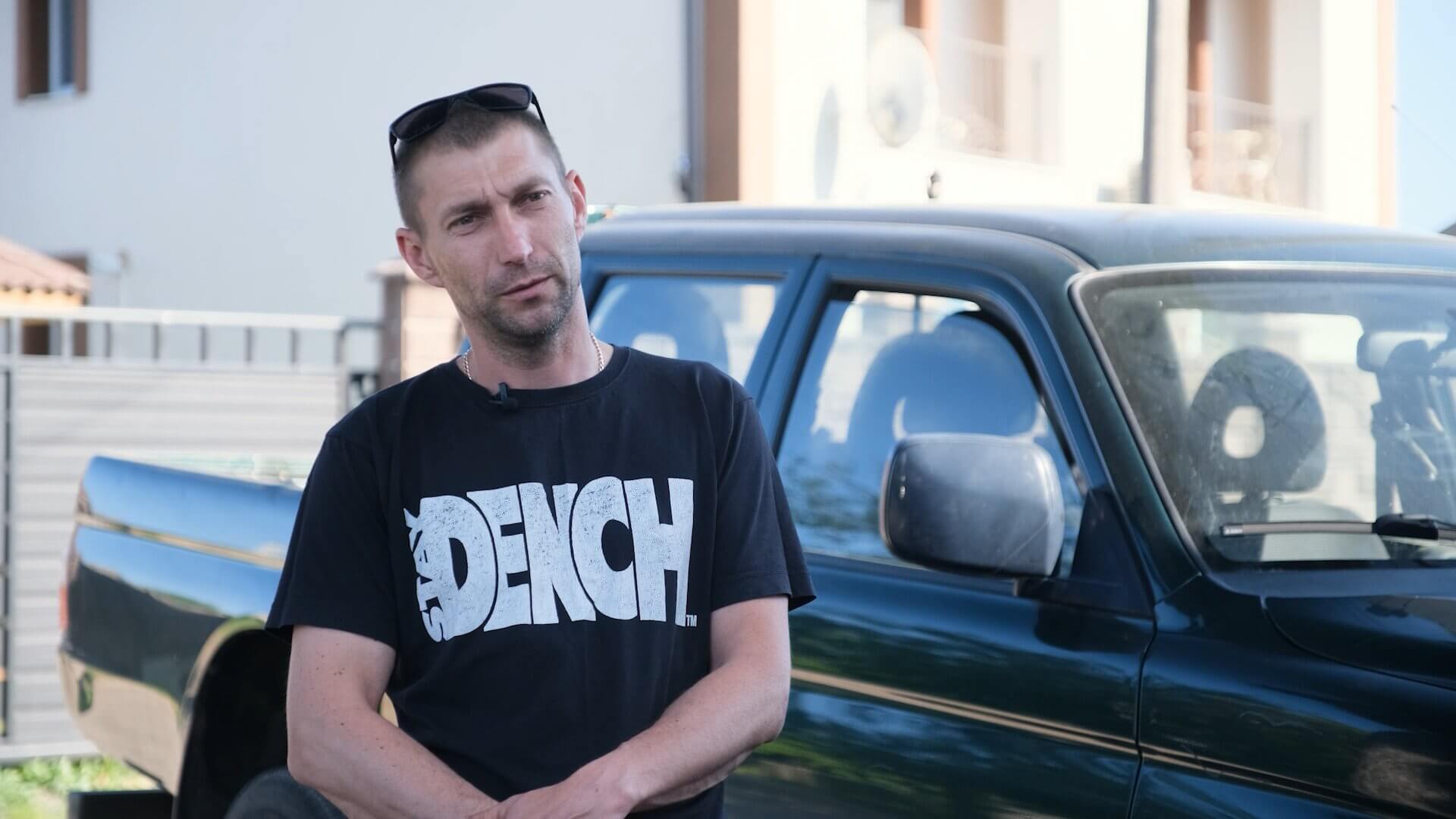
Two volunteers bring in cars for the defenders. From the first day of the full-scale war, a resident of the village of Tarakaniv, Andriy Tabert, has been volunteering. On the day of our conversation, he had just returned from abroad, bringing a Mitsubishi L200.
Such vehicles are used by the Bundeswehr – the German army. If necessary, Mr. Andriy repaints the cars he brings in to the color needed at the front, having taught himself how to do it.
– I have many friends left abroad, we got in touch, and my first trip for help was on March 6, 2022. I went abroad to pick up aid. It was medical supplies, food, and hygiene products.
– How did you end up volunteering?
– I have known Olga for a long time. Since the times when we worked in printing. And that’s how we stayed in touch, consulted, and then we ended up together.
“Part of Europe has switched to the car business for Ukrainian soldiers. They buy cars, then sell them to our volunteers…”
– Let’s recall the first car you brought in.
– The first car we brought in was a gray Nissan X-Trail from Lyon (France). We helped more with the transportation. My colleague lives in France, and his friend was drafted here into the army. They decided to buy the car, and we took care of the logistics. We shipped it in early May 2022. The car is still in service today.
– How many cars have you personally brought in?
– It’s hard to say. A lot.
– What is the hardest part of this activity for you?
– Choosing a good car. Part of Europe has switched to the car business for Ukrainian soldiers. They buy cars and then sell them to our volunteers, who deliver them to the military. It’s hard to choose because every time you choose, the only thought is: it has to serve the guys. The car needs to do the job because so much depends on it. And most importantly, the lives of the guys depend on it.
– Tell us about the nuances of buying cars abroad.
– In Europe, they do everything to convince you that the car is perfect. You arrive, look it over – your hands drop. You turn around, sit on a bench, open your phone, and if there are no other options, you wait for something to pop up. The best option is to be abroad, and as soon as an ad pops up, you react immediately and go to see it. Because if the car has been online for 3-4-5 days, it is already 50% less worth paying attention to, or the price is inflated.
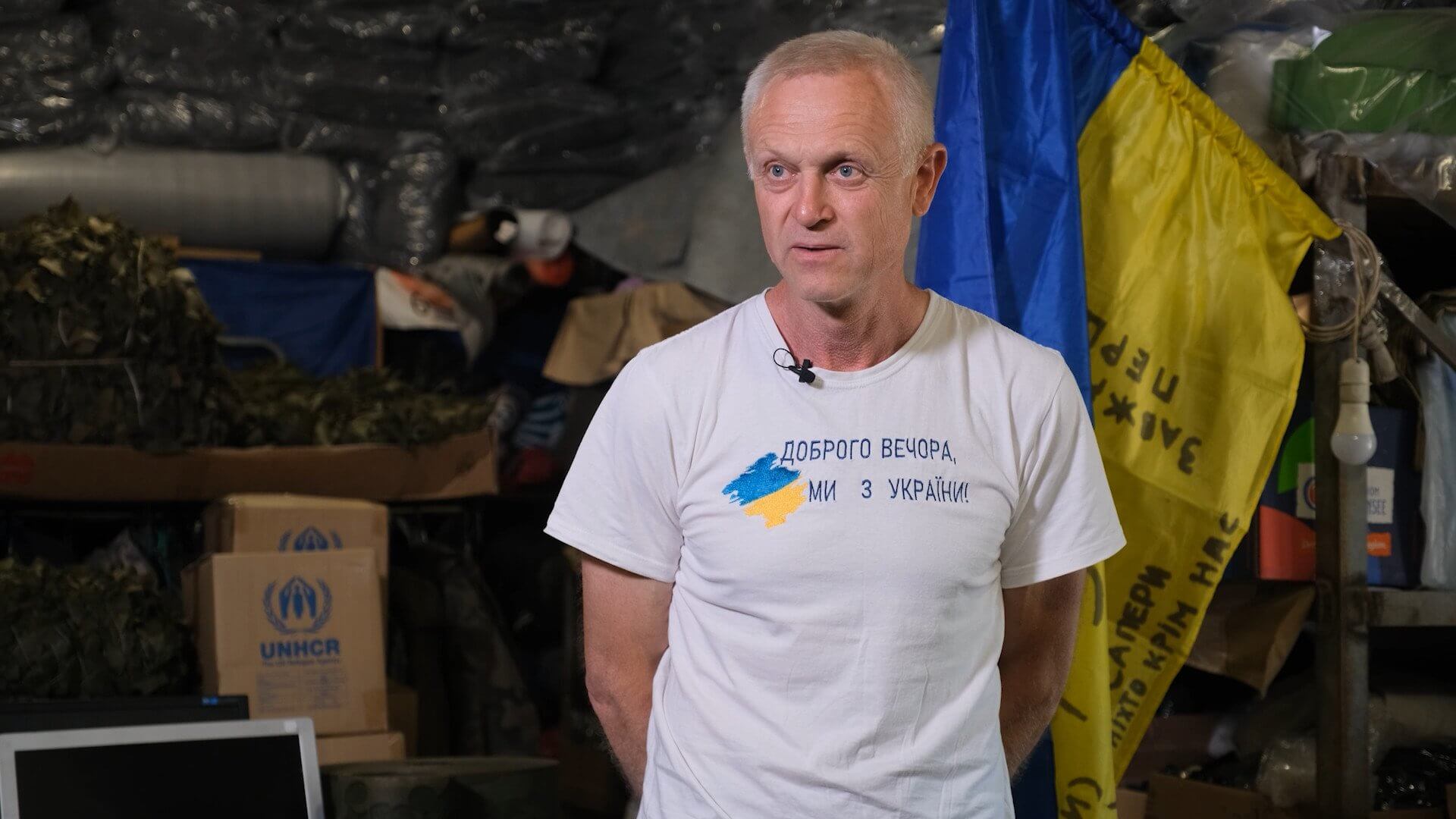
Another volunteer driver is Ruslan Rusnak. He’s not alone in his volunteering, as his wife and daughter also volunteer (more about them later).
– Do you remember the first car you brought for the military?
– The first cars were brought in last July. They were for a brigade in Zaporizhzhia. Two Volkswagen Transporter trucks.
– How many cars have you brought in total?
– No one keeps count. My passport will expire soon (laughs), I don’t keep count.
“There have already been cases where you come for one car, go to look at another, and end up buying the third one.”
– What is the hardest part for you?
– The hardest part is getting the route for departure (it’s a bit more settled now) and finding a worthy car with the funds, which are always insufficient.
– Has it ever happened that the car was as expected?
– There have already been cases where you come for one car, go to see another, and end up buying the third because there’s nothing left to see. You go through the leftovers, there’s nothing to take.
– What would you like to say to indifferent people from Dubno?
– Everyone has their own choice. They make their choice, and you can’t change that. But there are some people from Dubno that you wouldn’t expect to help, and yet they constantly do.
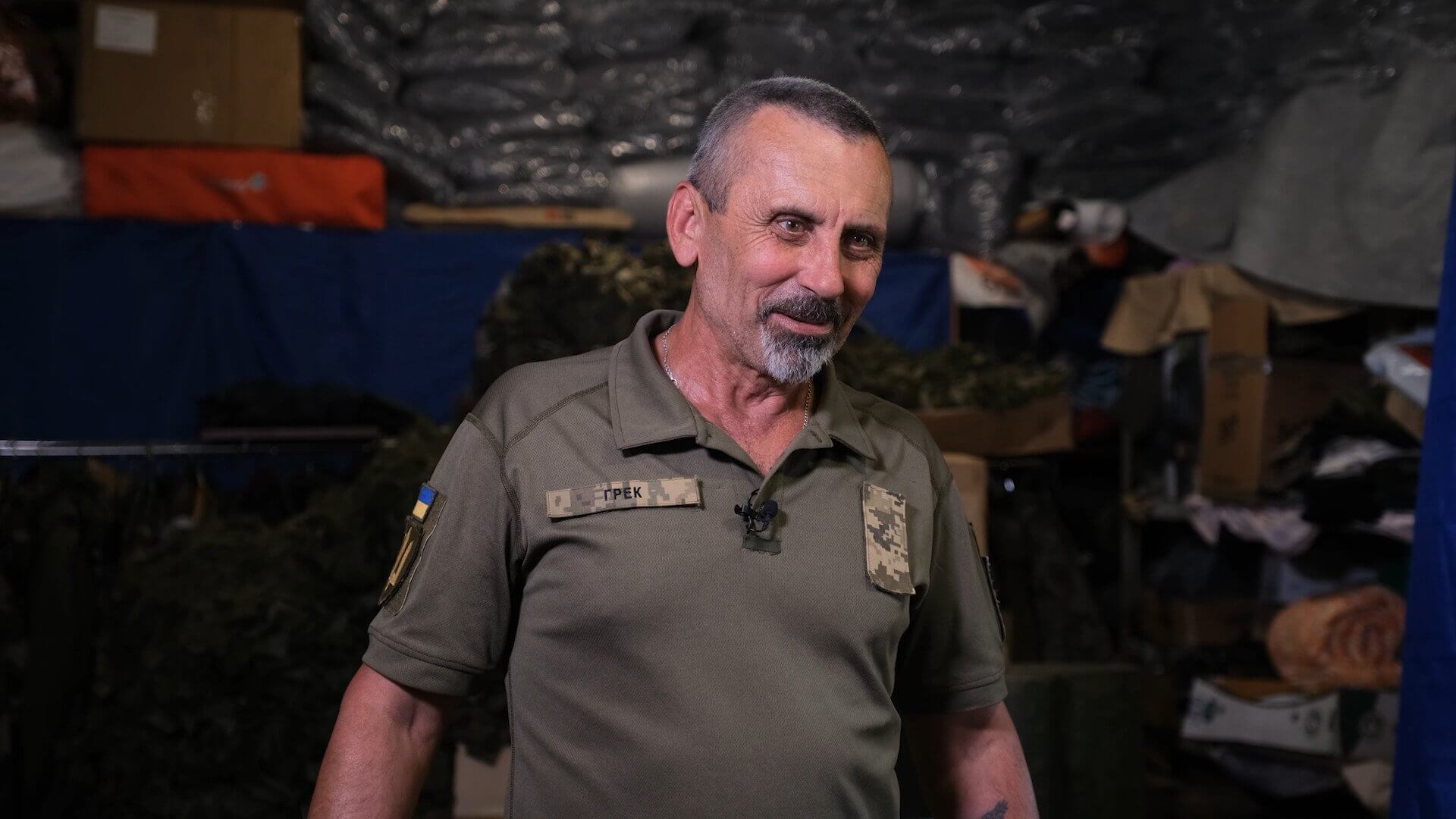
Volunteers have brought in cars for more than one defender. One of them is a soldier with the call sign “Greek.” He was born near Volnovakha in Donetsk Oblast, got married in Lviv Oblast, and has served in the Dubno battalion for 8 years. Overall, the man has 18 years of service.
– How did you meet the Volunteers 4.5.0?
– By chance. Actually, through my friend’s wife. She was the first to come here, and I serve with my friend. I try to help them, and they help me. They have already helped me many times.
– How do the volunteers help you?
– First of all, they lift my spirits. I’m a positive person. But sometimes, there are moments when I want to cry, but I laugh. It’s like with the Cossacks: when a Cossack sings, but his soul cries. It’s the same for me. Volunteers, whatever I or my son (he also serves) might need – they will get it. They will break themselves but they will get it. That’s who they are. Even if something needs to be decided with a car – I turn to the volunteer guys.
– As I understand it, the volunteers brought you a car.
– Yes. A beautiful car. I say that it is the best car. No other car could be like mine.
– Has it already been at combat positions?
– It has been out, but it hasn’t been at combat positions. I’m currently fulfilling the duties of a platoon commander, and many problems arise with movement. But now this problem has been resolved. If it weren’t for the volunteers, I would have been left with nothing. And walking on foot isn’t very feasible, because my health is not the same.
– What would you add about volunteering?
– God willing, there will be more volunteers like those here. Because 80% of the army is supported by volunteers and ordinary people.
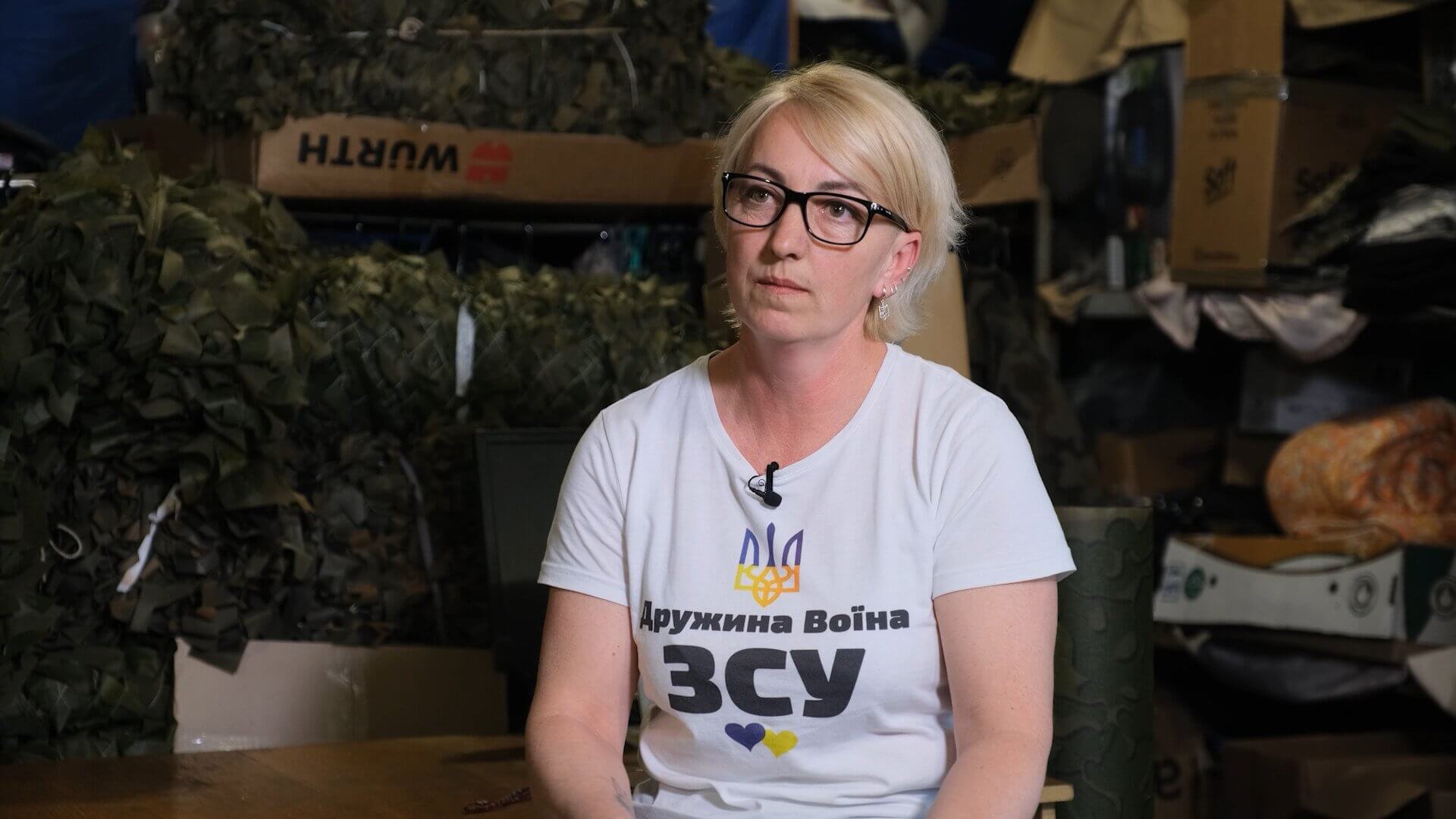
Natalia Bykova’s husband has been serving since 2015. She has been with him since 2016, traveling to combat zones. After peaceful life in Vinnytsia and relocating part of her family to Dubno, she has lived here for 4 years. And since the first days of the full-scale war, she has been volunteering.
– What has stood out the most to you over this past year?
– The most positive thing is that many friends have appeared. Those who understand, who help. A family has appeared that you can rely on in difficult times. Unfortunately, the war only affects those who have someone serving – a husband, son, brother. Those who have gone abroad and are deeply concerned about us – for these people, the war does not affect them.
– What is your main activity as a volunteer?
– My main activity is nets. I am very particular about them. Especially when newcomers arrive, it’s hard to explain how to weave them properly.
– Where do you get the fabric, the nets?
– People help us. We collect money, and the fabric is ordered from Kharkiv, but there are very long queues there. You have to wait 2-3 months. With fabric, it’s a bit easier. It’s from Dnipro, Ivano-Frankivsk. I ordered the fabric – and it arrives within a few days. Earlier, we wove nets from lining fabric. Such a net is very light, doesn’t get wet, but the guys said it falls apart very quickly. This fabric we are using now – it doesn’t burn, it doesn’t melt, it twists and is also very light.
Even if you take it down and hang it up ten times, it will stay in the same condition.
“We have an incredible, simply incredible homely atmosphere here. We have become so close.”
Vita Nikolaychuk and Svitlana Slobodenuk are a huge help with the weaving. They cut the ready-made strips into “fir tree” shapes, and the volunteers just need to weave.
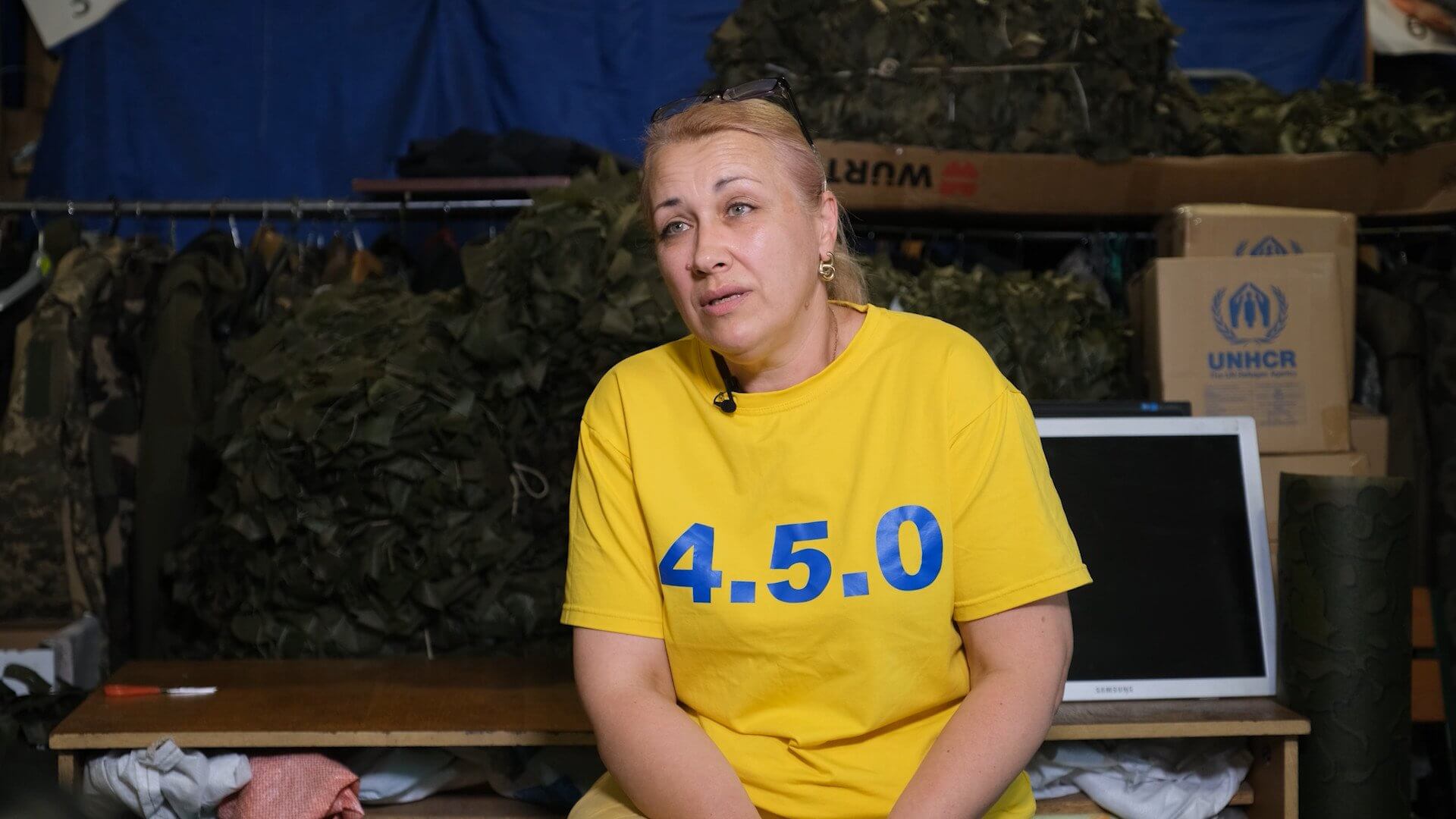
Natalia Rusnak is in charge of weaving nets and dealing with the products in the volunteer work. She had been following Olga Kuznetsova’s posts but couldn’t fully join because of work. And then…
– …I quit, had more time, and it sucked me in. Volunteering is an addiction. First and foremost, you’re happy that you can help even a little bit, give a drop of yourself, your strength, your ability, your work.
And the bonus is – we have an incredible, simply incredible homely atmosphere here. We’ve become so close.
– Your activities at the volunteer center are made up of:
– … from 9 to 6, sometimes longer. Nets, and there’s an incredible number of orders, as well as products. Thanks to our friends from abroad who help us, we have learned about so many new products. We thank these people, as they enable us to help the guys. We are generally unconditional – we try to help everyone. Even if it’s beyond our capabilities. We have a creative mind, a brain center. We sit down, think – and it all works out. We help from local guys to Zhytomyr, Kherson, Mykolaiv, Donetsk – everywhere.
– What can you say about people, do they help willingly?
– In general, people don’t want to work much. They should be ashamed because there are many requests. Many ask about weaving nets. Activity, to be honest, is close to zero. Probably we don’t feel the war here in its full measure. We live more relaxed. Thanks to God and the Armed Forces of Ukraine, it’s quiet here, we don’t feel the war, so maybe people think that help isn’t needed.
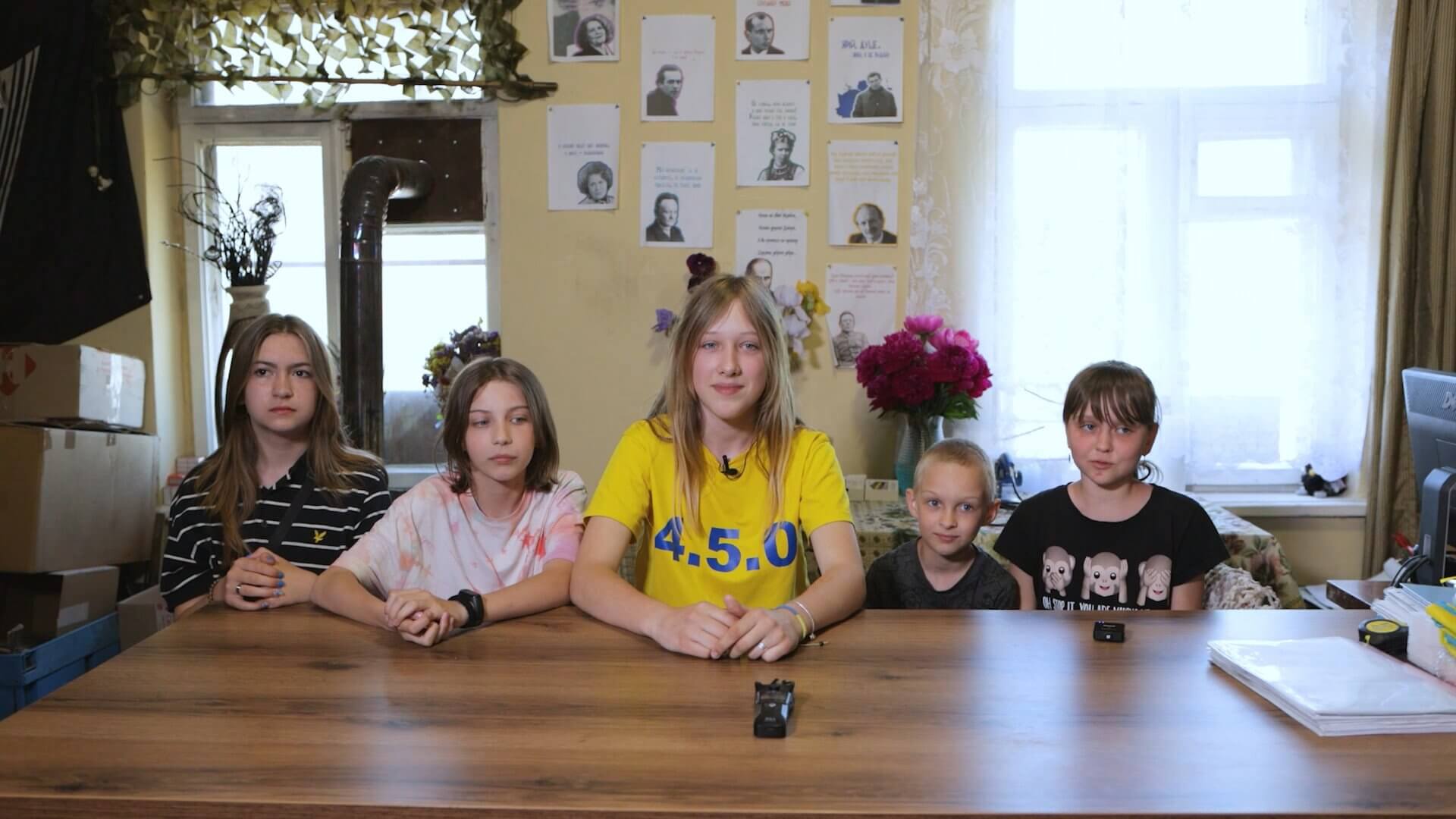
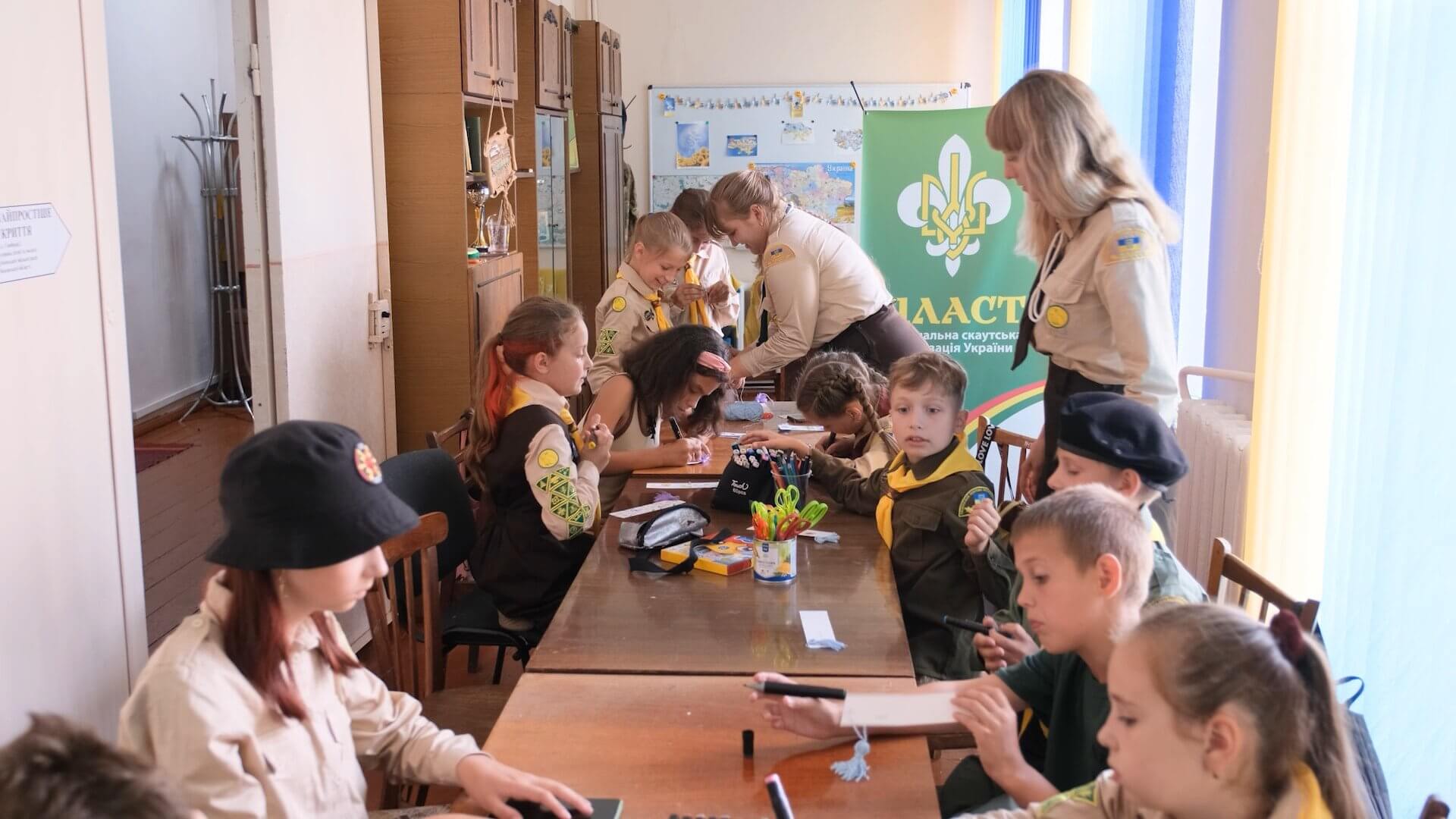
Not only adults but also children volunteer here. They have even formed a Juniors 4.5.0 group. What do the children do?
Dima, 8 years old:
We collect money for the Armed Forces of Ukraine to bring victory as soon as possible.
Anya, 12 years old:
From time to time, we come to volunteer and weave nets, but we also sell different toys, stopping cars. Recently, a mother and son brought us a book, which we have already sold. We sell delicious kvass and various games.
Inna, 12 years old:
Most often, Anya’s mom brings us kvass. It’s homemade, great, refreshing, especially in the heat. We sell it along with lemonade.
Sofia, 15 years old:
We stand on the street in the Bazarchyk neighborhood selling things. One time we went out to volunteer and stopped a soldier. We offered to sell toys, saying that all the money goes to the Armed Forces of Ukraine. And he says, “What, can’t you read? I am in the Armed Forces.” We felt so offended.
Alexa, 12 years old:
Last summer, we collected 10 thousand hryvnias. The most we collected in one day was about one to one and a half thousand.
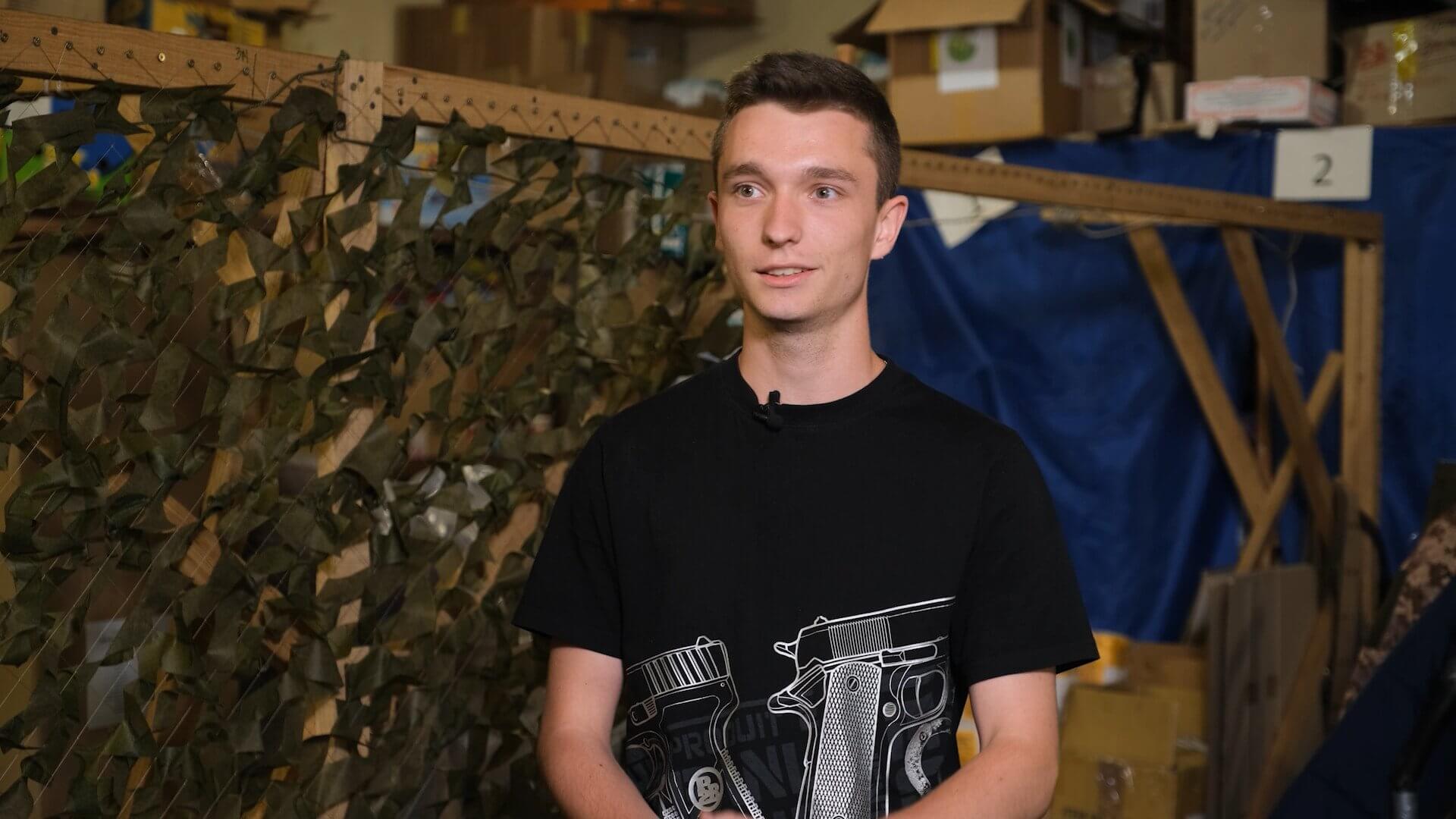
This money goes towards what’s needed, including buying cars. The teenagers even help find equipment – thermal imagers, rangefinders.
– We decided to find ways to find certain things cheaper to save money. Because a few thousand, even 500 or 1000 hryvnias – these are amounts that are hard to gather in these times.
The first thermal imager we bought in March 2022. We collected the funds with the Tarakaniv community, and that’s how it all started. Then I started helping Olga. Nothing is impossible. The only problem is the money, people have become very relaxed.
And the time needed for collecting is increasing more and more than we could gather before, says Ernests Tabert.
– And to your peers, kids your age, what would you like to say?
– We are the future of this nation, as we have to rebuild our country and support it in any way we can. We are no different from adults. We have the same strength, determination, and opportunities, and we can move mountains together with them.
You can join in the help by transferring funds using the following details:
Monobank card
4441114417628227
PrivatBank card
4149499375036181
For foreign currency
IBAN UA143052990000026202672531429
PayPal list.o2015o@gmail.com
For legal and physical entities:
Charity Fund VOLUNTEERS 4.5.0.
Recipient code
44964211
Account IBAN
UA083052990000026000020704516
JSC CB “PrivatBank”
Payment purpose: Assistance to the Armed Forces of Ukraine
Contacts:
Dubno, Sadova St., 51 A
0506100291
0637749373