
Social entrepreneurship at the UGCC in Dubno: how it works and plans for the future
Serving God and people – this is how the activities and actions of the parish of the Ascension of the Lord Ukrainian Greek Catholic Church in Dubno can be described.
And all thanks to its leaders. For the past 4 years, the parish priest has been Andriy Koval.
The priest is from Lviv, married, and has two children.
In addition to church ministry, the parish has other areas of activity. Among the largest and previously known – a literary café, a spiritual center, currently – the Sheptytsky design sewing studio, and with the start of the February invasion – a charity kitchen.
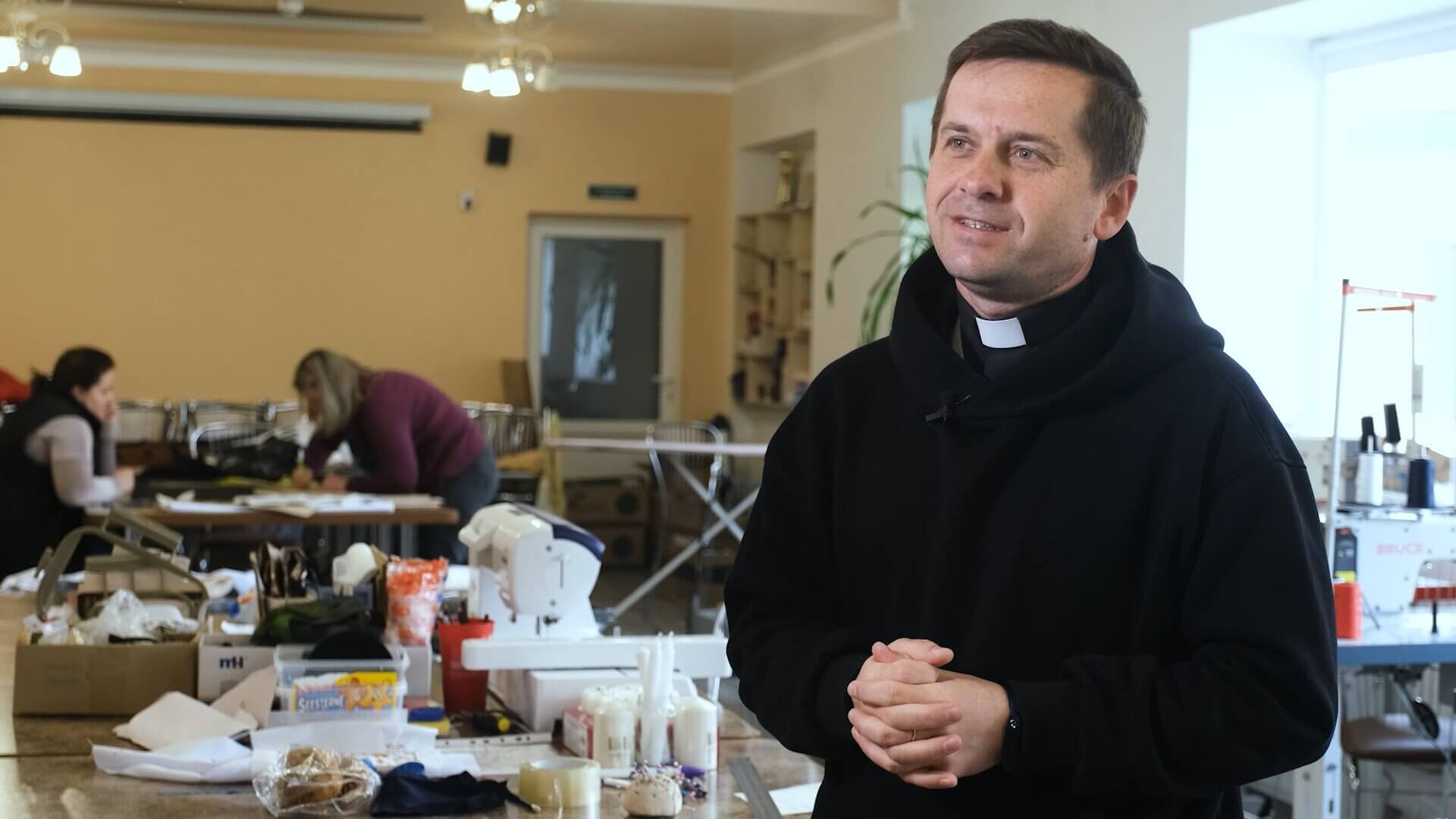
– Before that, I underwent training for priests so that social entrepreneurship could be organized in the parish.
Before the war started, we participated several times in projects that supported us. We were able to purchase certain equipment that helps us a lot to this day.
Thanks to this, we can successfully conduct our activities both in the sewing workshop and at the charity kitchen, – says Father Andriy Koval.
“To this day, we have an initiative that has not stopped since the beginning of the war – a prayer group.”
– What was February 24, 2022, like for you personally? Where do you get your strength and inspiration?
– The main activity of the parish is ministry. We have liturgies every day, we pray, and we meet with God for the first time. He gives us strength. With the start of the war, it was scary because many people left. I wasn’t fearless, but I didn’t think about leaving. At first, we were scared when the sirens went off, it was scary when the oil depot was blown up. But prayer gives a lot. To this day, we have an initiative that has not stopped since the beginning of the war – a prayer group. Every person chooses their time for prayer during the day, a minimum of half an hour. This creates a 24-hour prayer. Every nine days, people change. We pray for our military, the wounded, and for victory. Prayer gives us energy and strength.
– What have you been able to do over this more than a year of full-scale war?
– There is the Charity Fund “Caritas-Dubno” at the parish. With the influx of internally displaced persons, “Caritas-Ukraine” began forming separate food and hygiene kits, which we continue to distribute. A registry was kept, categories were analyzed, conditions changed, and then they delivered and supplied kits for those in need. It’s quite a good form of help for families. In this direction, 10th and 11th-grade students were involved. They were studying in school, but during that time, they volunteered and helped us.
“Many people were left without work in the first weeks of the war. We gave them the opportunity to help, talk to each other, release negative thoughts and emotions.”
The next moment was the opening of the charity kitchen. At first, it was chaotic, like many places in the city. Everyone wanted to do something. At first, there was even too much produce, and we didn’t know where to put it. We established cooperation with the National Guard in Rivne. We made dumplings, baked buns, and constantly sent them to their unit, because many people had been conscripted, and there weren’t enough resources. One of the parishioners made canned meats: various porridges with meat. We sent them to various special units. These were the first steps of the charity kitchen, when we gathered here two or three times a week, with 10 to 20 people.
Many people were left without work in the first weeks of the war. We gave them the opportunity to help, talk to each other, and release negative thoughts and emotions. We worked this way until we saw that the army was more or less supplied. Then we redirected our efforts to assist internally displaced persons. And, actually, up until Easter this year, we baked buns once or twice a week. From 500 to 900 buns at a time, two-thirds of which were immediately given to displaced persons. And the third part was sold to buy products. During the summer of last year, we mainly collaborated with school No. 2 in Mlyniv. There, they formed a center (about 200 displaced persons), and we constantly provided them with our products. After the disbandment of these shelters, we started delivering baked goods to various locations every week. This has been ongoing to this day. We make dumplings for the military, cook, freeze, and when needed, we send the products to the guys. So, it arrives at the location already prepared, and they just need to heat it up. Before Easter, we baked 150 paskas (easter bread) for the military. A portion was sold to parishioners who ordered the baked goods. We try to organize everything so that the funds can be used for charity.
“At first, it was really difficult because there was a shortage. In a week or two, flour disappeared in Dubno.”
– Father, tell us who helped you. Were there any difficulties?
– At first, it was really difficult because there was a shortage. In a week or two, flour disappeared in Dubno. We made some arrangements, we were expecting deliveries, and a bag at that time cost 2/3 more than it does now. But there were people who brought it for free, without taking any money. Then, a good cooperation developed with the district military administration, led by Vyacheslav Pekarsky. And they have been supplying us with flour ever since. The more we had, the more we produced. With the help of the administration, we established contacts with the Tarakaniv poultry farm, which constantly delivered eggs to us. After all, it’s an ingredient without which neither bread nor buns would taste as good. Other ingredients, like yeast and various fillings, we bought ourselves. Twice, we received help from Poland, from our church community in the city of Giżycko. They gave us a lot of help, which we are still using to this day.
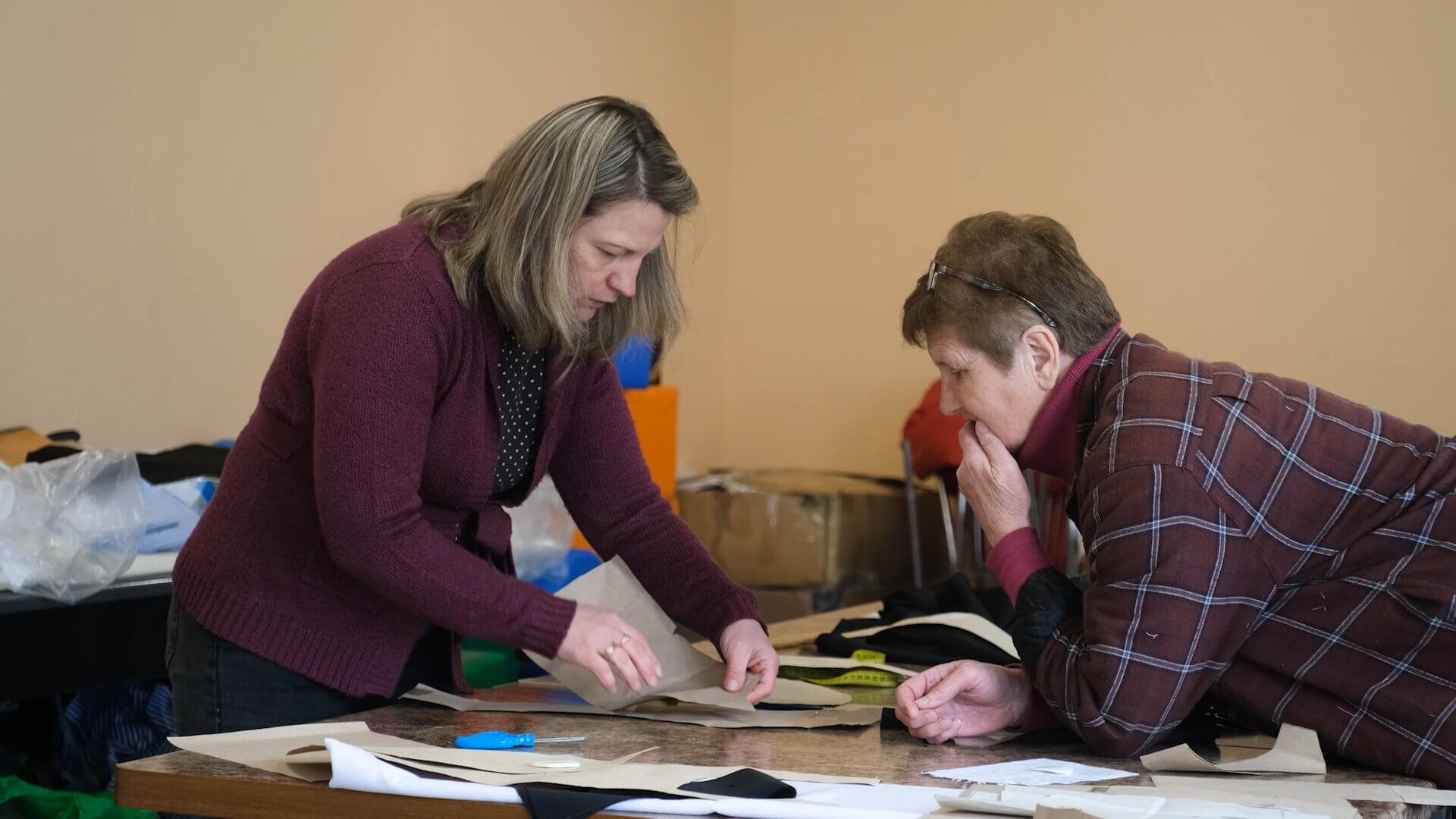
– It’s noticeable on social media that the sewing workshop is developing well. How did it all begin?
– When I underwent training, I had to formulate my direction.
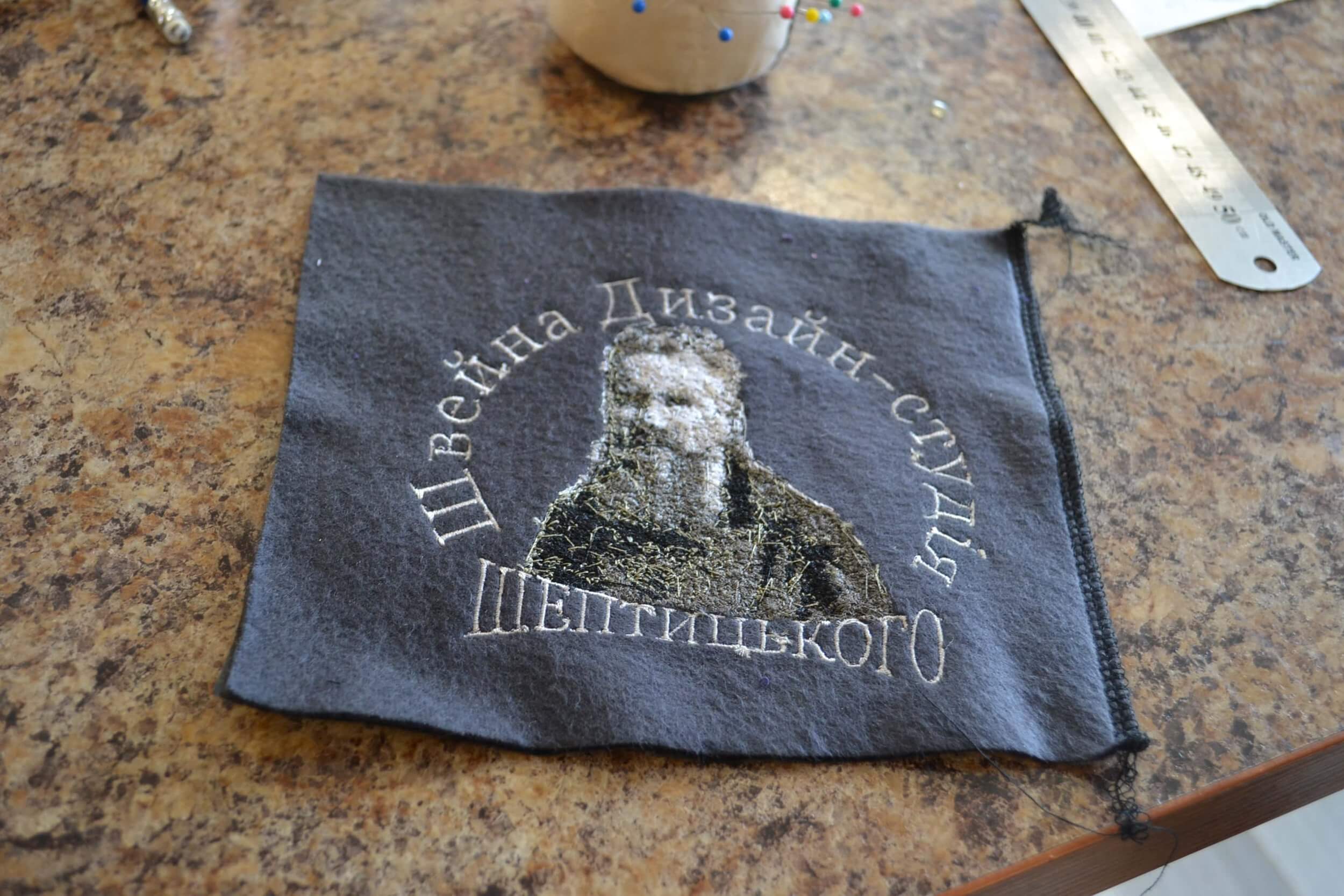
It had to be a project that you had to defend in front of a commission. But not just writing it down, but showing that you live it, that you like it. Since I already had some experience, in 2021-2022, thanks to various projects, we formed the base of necessary equipment. Then we started producing various products. Our plans were slightly disrupted by the war. In the beginning, everything seemed to stop for a week, nothing was done here. Then we realized – we had to do something. Now there are 4 people working in the workshop, but back then, life was bustling, with sometimes more than 20 people. There was a fabric shortage, but people brought it and old uniforms, which we repurposed and sewed warm fleece balaclavas. This was at the end of February, in March. Then we switched to sewing first aid kits and balaclavas for the military with eye slits. Later, in collaboration with Caritas-Zolochiv, we started sewing load-bearing vests. Some of the products were paid for by them, as there were sponsors, and with that money, we bought consumables and paid for utilities. This way, we managed. And we even managed to buy another sewing machine with our own money. Around the middle of the summer, we switched to peaceful products: t-shirts, shoppers with patriotic and national logos. At the same time, there was a direction for church attributes. We strive and already have our workshop’s logo.
People love beauty, they want to relax in a pleasant environment, they don’t want to look at something unfinished. This will be a highlight for this neighborhood.”
– Do you have plans for the future? Could you share them?
– At the end of 2022, we participated in an auction and fully purchased the second floor of a building, over 500 m² in size. We even started renovations to move our workshop there from the hall where we used to hold various events before the war. We are collaborating with architects from Rivne and, a month ago, presented the project for our entire spiritual center. It will have a second and third floor. In addition to the workshop we started with, there will be a space for working with preschool children. We also want to expand the kitchen. In another wing, we plan to create a fitness center that, in the future, could even be used for the rehabilitation of our soldiers. For the third floor, we need to renovate the attic. There will be a retreat center, where a group of 30-35 people will be able to stay. The roof will be flat, with solar panels installed on one side, and on the other side, there will be a café with a beautiful view.
“If you have the desire, you can learn anything.”
– Who exactly works in the charity kitchen and the sewing workshop?
– More women work in the charity kitchen, especially those who have free time from mid-autumn to mid-spring. They have proven themselves very well. It is also a great platform for them to socialize; I often talk with them on various topics. Most of them are our parishioners. Finding people for the kitchen is easier, but for the sewing workshop, skills are required. However, first and foremost, there must be a willingness to learn. If you have the desire, you can learn anything. The equipment we have, especially the embroidery machines, is very complex and computerized. It requires more than just a one-time training. Many questions arise in the process, and you need to consult others. Sometimes the process does not go as planned, and you have to look for solutions again. However, from last summer until now, we have mastered many steps, and we are succeeding. We also have our Facebook page, “Machine Embroidery Dubno,” where we showcase our work each time.
– So, can people reach out to you?
– Yes.
– Who would you like to thank?
– First and foremost, I want to thank the people who work here. You can’t do everything alone. I am very grateful to these people because together, we are accomplishing a common goal. Every Sunday after the Liturgy, we present our activities. We talk about what we are doing, where we are heading, what we need, and where we allocate our funds. We maintain transparency so that people can see our efforts and participate as well. If someone doesn’t have time, they can contribute with donations, advice, or in any way they can. Just as at the start of the war, we are still doing a lot. And it’s the teams in the charity kitchen and workshop who have made this possible. We understand each other and see what we want for the future. Of course, the support of the diocese is important. Our bishop, Josaphat, advised us to contact a Canadian organization, which ended up sponsoring our first machine. At that time, its cost was too high for us. We are grateful to the people who helped us. We produced the goods here, but they needed to be distributed. We had good cooperation with the state administration and, to some extent, with the city council. They occasionally provided us with food and delivered it to various locations. We thank everyone who contributed to our projects in any way. These projects continue to exist and bring joy and satisfaction. In general, I want to first thank God, who unites us all—so different, often unpredictable. There are various work processes in which we remain ourselves, and that cannot be taken away from us. But God helps us overcome these challenges. Even during this time, we have gained several good new people.
The enemy thought that by showering us with rockets, we would fall to our knees and beg them not to kill us. Instead, we showed heroism.
– Father, what would you like to add at the end of our conversation?
I believe in victory—it is inevitable. It depends not so much on our human efforts as on our willingness to align our actions with God’s will. If we do not try to manipulate God but live as stated in the prayer “Our Father”: “Thy will be done,” then we will have great success in building a beautiful nation. We must recognize our identity as a people. I wish for us to become a great nation—Ukrainians whom the entire world now admires, who are proud of our strength and willpower. The enemy thought that by bombarding us with rockets, we would fall to our knees and beg for mercy. Instead, we showed heroism. And not the government, but ordinary people. All good initiatives resulted in our ability to help the military and internally displaced persons. Sometimes, when you see how funds accumulate—it’s incredible. People are willing to help. I want us to remain this way in the future: open, sincere, and never losing our sense of dignity and desire for freedom.
If you wish to join the initiatives at the UGCC parish, write to the Church of the Ascension of the Lord UGCC in Dubno or Father Andriy.
To order embroidery, contact “Machine Embroidery Dubno.”